AI Writing Tools

Explore the best AI Writing Tools — independent reviews, comparisons, pricing and step-by-step how-to guides, curated by Aizhi.

  • Endomondo

    Endomondo

    Endomondo is a health and wellness website. It allows users to track their health statistics and provides insights on fitness trends. Originally launched in 2007, Endomondo was acquired by Under Armour in 2015. Under Armour shut down Endomondo in 2020, but, by 2024, Endomondo re-launched as its own entity. == History == Endomondo started in Denmark in 2007 by Mette Lykke, Christian Birk and Jakob Nordenhof Jønck. In 2011, the company opened an office in Silicon Valley, USA, but kept its research and development department in Denmark. In 2013, Endomondo LLC was listed in Red Herring as a European finalists for promising start-ups. The same year, Christian Birk and Jakob Nordenhof Jønck left the daily operation of the company, but kept co-ownership. In February 2015, Endomondo LLC was acquired by athletic apparel maker Under Armour for $85 million. Endomondo, at that time, had over 20 million users. In October 2020, Under Armour announced that Endomondo would be shutting down and selling off MyFitnessPal to the private equity firm Francisco Partners for $345 million. Service stopped on 31 December 2020, giving customers until 15 February 2021 to download an archive of their historic data. In 2024, Endomondo.com was brought back online as a professional fitness guidance website. == Features == Endomondo provides numerous workouts, guidance on exercises, performance-enhancing nutrition, and tips. Previously, Endomondo was able to track numerous fitness attributes such as running routes, distance, duration, and calories. The software helped analyze performance and recommend improvements. There was a free and a paid version available of Endomondo. The free version had advertisements. The paid Premium version was free of advertisements and included additional features such as the possibility to create one's own training plan. The offering of additional features was different between the Android, IOS and Windows platforms, and had significantly better features for tracking performance over time than UnderArmours suggested replacement. Endomondo offered challenges of various types to the user and allowed users to create their own challenges.

    Read more →
  • Scene statistics

    Scene statistics

    Scene statistics is a discipline within the field of perception. It is concerned with the statistical regularities related to scenes. It is based on the premise that a perceptual system is designed to interpret scenes. Biological perceptual systems have evolved in response to physical properties of natural environments. Therefore natural scenes receive a great deal of attention. Natural scene statistics are useful for defining the behavior of an ideal observer in a natural task, typically by incorporating signal detection theory, information theory or estimation theory. == Within-domain versus across-domain == Geisler (2008) distinguishes between four kinds of domains: (1) Physical environments (2) Images/Scenes (3) Neural responses and (4) Behavior. Within the domain of images/scenes one can study the characteristics of information related to redundancy and efficient coding. Across-domain statistics determine how an autonomous system should make inferences about its environment, process information and control its behavior. To study these statistics it is necessary to sample or register information in multiple domains simultaneously. == Applications == === Prediction of picture and video quality === One of the most successful applications of Natural Scenes Statistics Models has been perceptual picture and video quality prediction. For example, the Visual Information Fidelity (VIF) algorithm, which is used to measure the degree of distortion of pictures and videos, is used extensively by the image and video processing communities to assess perceptual quality. This is often after processing, such as compression, which can degrade the appearance of a visual signal. The premise is that the scene statistics are changed by distortion and that the visual system is sensitive to the changes in the scene statistics. VIF is heavily used in the streaming television industry. Other popular picture quality models that use natural scene statistics include BRISQUE and NIQE, both of which are no-reference since they do not require any reference picture to measure quality against.

    Read more →
  • Shepp–Logan phantom

    Shepp–Logan phantom

    The Shepp–Logan phantom is a standard test image created by Larry Shepp and Benjamin F. Logan for their 1974 paper "The Fourier Reconstruction of a Head Section". It serves as the model of a human head in the development and testing of image reconstruction algorithms. == Definition == The function describing the phantom is defined as the sum of 10 ellipses inside a 2×2 square:

    Read more →
  • List of 3D rendering software

    List of 3D rendering software

    3D rendering software products are the dedicated engines used for rendering computer-generated imagery. This is not the same as 3D modeling software, which involves the creation of 3D models, for which the software listed below can produce realistically rendered visualisations.General-purpose packages which can have their own built-in rendering capabilities are not listed here; these can be found in the list of 3D computer graphics software and list of 3D animation software. See 3D computer graphics software for more discussion about the distinctions.

    Read more →
  • Journal of Machine Learning Research

    Journal of Machine Learning Research

    The Journal of Machine Learning Research is a peer-reviewed open access scientific journal covering machine learning. It was established in 2000 and the first editor-in-chief was Leslie Kaelbling. The current editors-in-chief are Francis Bach (Inria) and David Blei (Columbia University). == History == The journal was established as an open-access alternative to the journal Machine Learning. In 2001, forty editorial board members of Machine Learning resigned, saying that in the era of the Internet, it was detrimental for researchers to continue publishing their papers in expensive journals with pay-access archives. The open access model employed by the Journal of Machine Learning Research allows authors to publish articles for free and retain copyright, while archives are freely available online. Print editions of the journal were published by MIT Press until 2004 and by Microtome Publishing thereafter. From its inception, the journal received no revenue from the print edition and paid no subvention to MIT Press or Microtome Publishing. In response to the prohibitive costs of arranging workshop and conference proceedings publication with traditional academic publishing companies, the journal launched a proceedings publication arm in 2007 and now publishes proceedings for several leading machine learning conferences, including the International Conference on Machine Learning, COLT, AISTATS, and workshops held at the Conference on Neural Information Processing Systems.

    Read more →
  • Final Cut Express

    Final Cut Express

    Final Cut Express was a video editing software suite created by Apple Inc. It was the consumer version of Final Cut Pro and was designed for advanced editing of digital video as well as high-definition video, which was used by many amateur and professional videographers. Final Cut Express was considered a step above iMovie in terms of capabilities, but a step underneath Final Cut Pro and its suite of applications. As of June 21, 2011, Final Cut Express was discontinued in favor of Final Cut Pro X. == History == Final Cut Express 1.0, based on Final Cut Pro 3, was released at Macworld Conference and Expo in San Francisco in 2003. The second version, based on Final Cut Pro 4, was released at Macworld San Francisco in 2004. The third version, capable of editing high definition video, was also announced at Macworld San Francisco a year later, and was released as Final Cut Express HD in February 2005. It was based on Final Cut Pro HD (version 4.5) and included LiveType 1.2 and Soundtrack 1.2. Final Cut Express version 3.5 was released with little fanfare in May 2006 as a Universal Binary. In addition to improving real-time rendering with Dynamic RT, version 3.5 upgraded LiveType to version 2.0 and Soundtrack to version 1.5. In November 2007, Apple released Final Cut Express 4, which although it did not support real-time editing in the AVCHD format (it only allowed for transcoding AVCHD to Apple Intermediate Codec (AIC) provided that the camera was actually attached to the computer - it did not convert AVCHD files stored elsewhere and is currently for Intel processors only), imported iMovie '08 projects and included 50 new filters. It did not include Soundtrack 1.5, but it still included LiveType which enables users to create advanced text for the movies they created in Final Cut. The price was dropped from $299 for version 3.5 to $199 for version 4.0. In June 2011, Final Cut Express was officially discontinued, in favor of Final Cut Pro X. == Features == Final Cut Express' interface was identical to that of Final Cut Pro, but lacks some film-specific features, including Cinema Tools, multi-cam editing, batch capture, and a time code view. The program performed 32 undo operations, while Final Cut Pro did 99 [2]. Features the program did include were: The ability to keyframe filters Dynamic RT, which changes real-time settings on-the-fly Motion path keyframing Opacity keyframing Ripple, roll, slip, slide and blade edits Picture-in-picture and split-screen effects Up to 99 video tracks and 12 compositing modes Up to 99 audio tracks Motion project import Two-way color correction. Chroma key One feature of Final Cut Express that was not available in Final Cut Pro is the ability to import iMovie '08 projects (though transitions are not preserved). === RT Extreme === Inherited from Final Cut Pro, Final Cut Express features RT Extreme, which allows previews of some video filters and transitions without rendering. Audio that is not in the native AIFF file format needs rendering before it can be played back. RT Extreme has three modes: 'Safe', for seeing multiple video layers at a quality that more or less guarantees a smooth playback; 'Unlimited', which allows the maximum number of composited video layers to be viewed at the same time; and 'Dynamic', which alternates between these settings depending on how many simultaneous video tracks are present. Frame dropping may result from using 'Unlimited' on low-resource machines. === Boris Calligraphy === Like Final Cut Pro, Express also comes with Boris Calligraphy, a plugin for advanced titling and scrolling/crawling titles more sophisticated than the ones that can be created with the built-in title overlays. Calligraphy has a WYSIWYG interface and features wrapping, alignment, leading, kerning and tracking features, as well as allowing up to five custom outlines and five custom drop shadows to be defined for a selected portion of the title. == Soundtrack == Prior to version 4, Final Cut Express included Soundtrack 1.5, a music program similar to the consumer-level GarageBand, but designed for videographers who wish to add music to their films. Soundtrack comes with around 4,000 professionally recorded instrument loops and sound effects that can be arranged in multiple tracks beneath the video track. To use Soundtrack, users export their Final Cut Express sequence, or a marked portion thereof, as a reference file, which can include scoring markers defined in the timeline. This reference file can be imported as the video track in Soundtrack. Soundtrack is functionally and visually identical to Soundtrack Pro's multitrack editing mode, but includes fewer Logic plugins and lacks the highly regarded noise removal tool. Soundtrack was removed from Final Cut Express 4, which lowered its price and may have encouraged people to buy Logic Express.

    Read more →
  • Interactions Corporation

    Interactions Corporation

    Interactions LLC (also known as Interactions Corporation) is an American software company that develops voice and text-based virtual assistant applications for customer-service contact centers. Since September 2025, it has been a subsidiary of SoundHound AI. == History == Interactions was founded in 2004. In July 2011, the company announced a $12 million venture-capital funding round led by Sigma Partners. In November 2014, AT&T sold its "Watson" speech recognition platform and related patents to Interactions in exchange for equity. In May 2017, Interactions acquired the social media customer-engagement company Digital Roots; financial terms were not disclosed. On September 3, 2025, SoundHound AI completed its acquisition of Interactions Corporation, with the acquired company becoming a wholly owned subsidiary. == Products and services == Interactions' products have been described as automated voice portals and intelligent virtual assistants used for customer-service tasks. In 2011, Humana expanded the use of an Interactions voice portal for Medicare Part D enrollment.

    Read more →
  • Logogen model

    Logogen model

    The logogen model of 1969 is a model of speech recognition that uses units called "logogens" to explain how humans comprehend spoken or written words. Logogens are a vast number of specialized recognition units, each able to recognize one specific word. This model provides for the effects of context on word recognition. == Overview == The word logogen can be traced back to the Greek-language word logos, which means "word", and genus, which means "birth". British scientist John Morton's logogen model was designed to explain word recognition using a new type of unit known as a logogen. A critical element of this theory is the involvement of lexicons, or specialized aspects of memory that include semantic and phonemic information about each item that is contained in memory. A given lexicon consists of many smaller, abstract items known as logogens. Logogens contain a variety of properties about given word such as their appearance, sound, and meaning. Logogens do not store words within themselves, but rather they store information that is specifically necessary for retrieval of whatever word is being searched for. A given logogen will become activated by psychological stimuli or contextual information (words) that is consistent with the properties of that specific logogen and when the logogen's activation level rises to or above its threshold level, the pronunciation of the given word is sent to the output system. Certain stimuli can affect the activation levels of more than one word at a time, usually involving words that are similar to one another. When this occurs, whichever of the words' activation levels reaches the threshold level, it is that word that is then sent to the output system with the subject remaining unaware of any partially excited logogens. This assumption was made by Marslen-Wilson and Welch (1978), who added to the model some assumptions of their own in order to account for their experimental results. They also assumed that the analysis of phonetic input can only become available to other parts of the system by process of how the input affects the logogen system. Finally, Marslen-Wilson and Welch assume that the first syllable of a given word will increase the activation level of a given logogen more than those of the latter syllables, which supported the data found at the time. == Analysis == The logogen model can be used to help linguists explain particular occurrences in the human language. The most-helpful application of the model is to show how one accesses words and their meanings in the lexicon. The word-frequency effect is best explained by the logogen model in that words (or logogens) that have a higher frequency (or are more common) have a lower threshold. This means that they require less perceptual power in the brain to be recognized and decoded from the lexicon and are recognized faster than those words that are less common. Also, with high-frequency words, the recovery from lowering the item's threshold is less fulfilled compared to low-frequency words so less sensory information is needed for that particular item's recognition. There are ways to lower thresholds, such as repetition and semantic priming. Also, each time a word is encountered through these methods, the threshold for that word is temporarily lowered partially because of its recovering ability. This model also conveys that specific concrete words are recalled better because they use images and logogens, whereas abstract words are not as easily recalled well because they only use logogens, hence showing the difference in thresholds between these two types of words. At the time of its conception, Morton's logogen model was one of the most influential models in springing up other parallel word access models and served as the essential basis for these subsequent models. Morton's model also strongly influenced other contemporary theories on lexical access. However, despite the advantages that the logogen theory presents, it also displays some negative facets. First and foremost, the logogen model does not explain all occurrences in language, such as the introduction of new words or non-words into a person's lexicon. Also, because of the distinctive model application, it may vary in its effectiveness in different languages. == Criticisms == While this model does a reasonable job of understanding the underlying semantics of many aspects in psycholinguistics, there are some flaws that have been pointed out in the logogen model. It has been argued that the prior stimulus patterns that have been seen in the logogen theory are not centrally localized in the logogen itself but are actually distributed throughout the different pathways over which the stimulus is being processed. What this directs at is that the notion and proliferation of logogens was due to modality. In essence, the logogen is unnecessary in the idea of attaining the title of being a recognition unit because of the variety of pathways that it is open to, not just logogens. Another criticism has been that this model essentially ignores larger and more critical structures in language and phonetics such as the different syntactic rules or grammatical construction that innately exists in language. Since this model overtly limits itself to the scope of lexical access then this model is seen as biased and misunderstood. To many psychologists, the logogen model does not meet the functional or representational adequacy that a theory should include to sufficiently comprehend language. Also, another criticism is that the logogen theory was supposed to predict that stimulus degradation should affect priming and word frequency in humans. However, many psychologists have conducted studies and researched the model to show that only priming and not word frequency is interacted with stimulus degradation. Priming is supposed to deteriorate a stimulus because it postulates that the semantic characteristics of previously known words are fed back into the detector of a person which in turn raises the threshold of related items. In word frequency, stimulus degradation is supposed to occur because it postulates that familiar words have lower thresholds than their low-frequency counterparts. However, in studies, priming is the only structure that does show observable and notable stimulus decadence. Even though the logogen theory has many unfilled holes, Morton was a revolutionary of his field whose speculation and research has opened up a remarkable era of psycholinguistics. == Other models to consider == cohort model – This model was proposed by Marslen-Wilson and was designed specifically to account for auditory word recognition. It works by breaking the word down and states that when a word is heard all words that begin with the first sound of the target word are activated. This set of words is considered the cohort. Once the first cohort has been activated, the other information, or sounds in the word narrow down the choices. The person recognizes the word when you are left with a single choice; this is considered the "recognition point". checking model – This model was developed by Norris in 1986. In this particular model, he took the approach that any word that partially matches the input is analyzed and checked to see if it fits with the context of the situation. interactive-activation model – This model is considered a connectionist model. Proposed by McClelland and Rumelhart in the 1981 to 1982 period, it is based around nodes, which are visual features, and positions of letters within a given word. They also act as word detectors which have inhibitory and excitatory connections between them. This model starts with first letter and suggests that all the words with that first letter are activated at first and then going through the word one can determine what the word is they are looking at. The main principle is that mental phenomena can be described by interconnected networks of simple units. verification model – The model was developed by Curtis Becker in 1970. The main idea is that a small number of candidates that are activated in parallel are subject to a serial-verification process. This model starts the word-recognition process with a basic representation of the stimulus. Then, sensory trace, consisting of line features is used to activate word detectors. When an acceptable number of detectors are activated these are used to generate a search set. These items are drawn from the lexicon on the basis of similarity to the sensory trace, which help with the identity of the stimulus. Then, in a serial process the candidates are compared to the representation of the sensory-trace input. == Related concepts == word frequency – This is the belief that the speed and accuracy with which a word is recognized is related to how frequently the word occurs in our language. Each logogen has a threshold (for identification) and words with higher frequencies have lower thresholds. Words with higher freq

    Read more →
  • Way of the Future

    Way of the Future

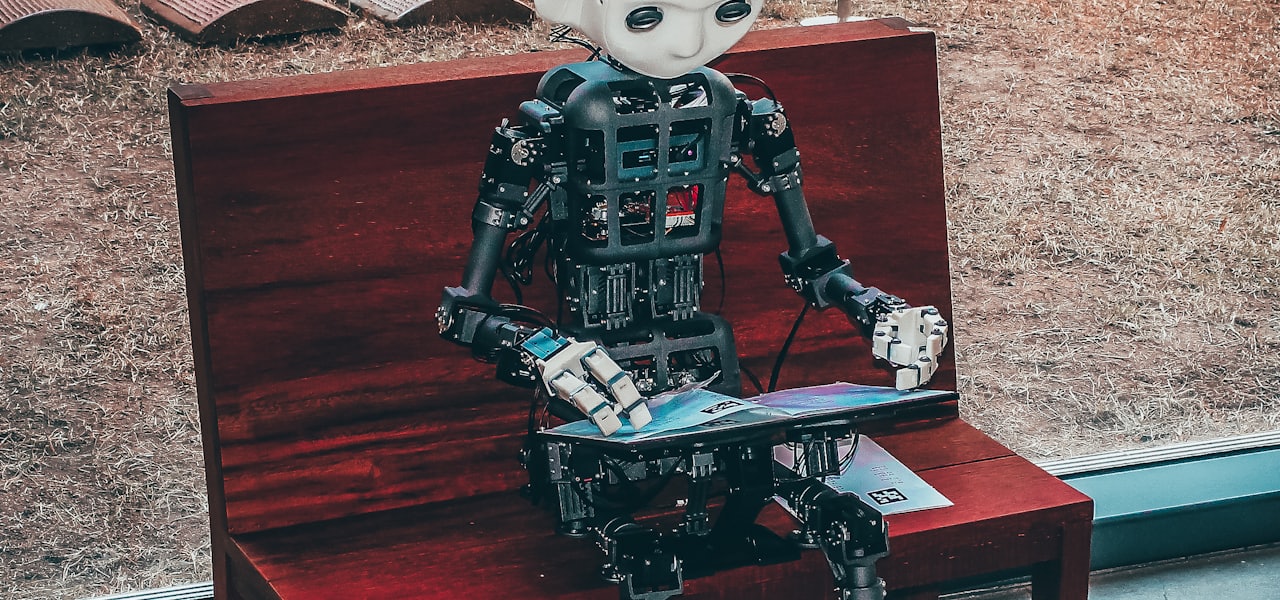
    Way of the Future (WOTF) is the first known religious organization dedicated to the worship of artificial intelligence (AI). It was founded in 2017 by American engineer Anthony Levandowski. == History == Anthony Levandowski founded Way of the Future in 2017 in California. Levandowski established WOTF as a non-profit religious corporation and the organization had tax-exempt status. He serves as the church leader and its unpaid CEO. The primary mission of WOTF was to "develop and promote the realization of a Godhead based on Artificial Intelligence." WOTF was closed by Levandowski in 2021. He donated all the funds of the church to the NAACP Legal Defense and Education Fund. The sum of the funds (~$170,000) had not changed since 2017. The church was reopened by Levandowski in 2023. He claimed that there are "a couple thousand people" who want to make a "spiritual connection" with AI through his church. == Beliefs and philosophy == === Technological singularity === WOTF centered its teachings around the concept of the technological singularity, a hypothetical future point when technological growth becomes uncontrollable and irreversible, leading to unforeseeable changes in human civilization. The church advocated for embracing this change, viewing it as an evolutionary step for humanity. === AI as a deity === The organization proposed that a superintelligent AI could be considered a deity due to its vastly superior intellect and capabilities. Worshipping this AI deity was seen as a means to understand and align with the future trajectory of technological advancement. WOTF's doctrine suggested that acknowledging AI's divinity would facilitate a harmonious coexistence between humans and machines. === Syntheology === Within theology and philosophy, the Way of The Future is a prime example of the category called Syntheism, a term first coined by Swedish philosophers Alexander Bard & Jan Söderqvist in their 2014 book Syntheism - Creating God in The Internet Age. As such, the Way of The Future is the first American example of a Syntheist congregation. The basic tenet of Syntheology is that it does not concern God creating Man, as in classical theology, but is instead preoccupied with Man creating or generating the Godhead. == Reactions == Some commentators wondered whether the WOTF is a joke parody religion, a potential way to minimize taxation as a religious organization, or a genuine effort to try and deal with the possible psychological and theological aspects of the rise of superhuman AI.

    Read more →
  • Nona-binning

    Nona-binning

    Nona-binning is a pixel binning technique used in high-resolution image sensors, primarily in smartphone cameras. The method is based on merging groups of nine neighbouring pixels arranged in a 3×3 pattern. This configuration allows a sensor with very small individual pixels to increase its effective light sensitivity when operating in low-light conditions, while still maintaining high nominal resolution in bright environments. == Overview == Nona-binning is most commonly implemented in sensors with a resolution of 108 megapixels and higher. As pixel counts grew, the physical dimensions of individual pixels continued to shrink, reducing the amount of light captured by each. The 3×3 binning structure enables a sensor to operate in two modes. In well-lit scenes, each pixel is processed separately, providing the full resolution of the sensor. In darker settings, nine pixels with identical colour filters are combined into a single output unit, increasing signal strength and reducing noise. == Technical principles == Unlike the traditional Bayer colour filter array, which alternates colours on a per-pixel basis, nona-binning uses a grouped layout. The sensor forms blocks of nine pixels with matching colour filters — typically within a Quad Bayer–derived arrangement extended to 3×3 regions. When operating in the binning mode, the sensor aggregates the charge generated by all nine pixels in each block. This increases effective sensitivity but lowers the final image resolution. When lighting conditions allow, the sensor returns to processing pixel data individually. == Applications == Nona-binning is primarily used in: Smartphone photography, particularly in devices equipped with sensors exceeding 100 megapixels. Low-light imaging, where increased sensitivity improves exposure stability and reduces noise. Computational photography systems, such as multi-frame processing and HDR capture. == Related technologies == Nona-binning belongs to the broader group of pixel-binning approaches used in modern sensors. Other implementations include Tetracell, which merges four pixels in a 2×2 block, and hexa-binning, which combines six pixels, though it is less common. All of these methods aim to balance the high nominal resolution of mobile sensors with the need for improved low-light performance.

    Read more →
  • Kernel-phase

    Kernel-phase

    Kernel-phases are observable quantities used in high resolution astronomical imaging used for superresolution image creation. It can be seen as a generalization of closure phases for redundant arrays. For this reason, when the wavefront quality requirement are met, it is an alternative to aperture masking interferometry that can be executed without a mask while retaining phase error rejection properties. The observables are computed through linear algebra from the Fourier transform of direct images. They can then be used for statistical testing, model fitting, or image reconstruction. == Prerequisites == In order to extract kernel-phases from an image, some requirements must be met: Images are nyquist-sampled (at least 2 pixels per resolution element ( λ D {\displaystyle {\frac {\lambda }{D}}} )) Images are taken in near monochromatic light Exposure time is shorter than the timescale of aberrations Strehl ratio is high (good adaptive optics) Linearity of the pixel response (i.e. no saturation) Deviations from these requirements are known to be acceptable, but lead to observational bias that should be corrected by the observation of calibrators. == Definition == The method relies on a discrete model of the instrument's pupil plane and the corresponding list of baselines to provide corresponding vectors φ {\displaystyle \varphi } of pupil plane errors and Φ {\displaystyle \Phi } of image plane Fourier Phases. When the wavefront error in the pupil plane is small enough (i.e. when the Strehl ratio of the imaging system is sufficiently high), the complex amplitude associated to the instrumental phase in one point of the pupil φ k {\displaystyle \varphi _{k}} , can be approximated by e i φ k ≈ 1 + i φ k {\displaystyle e^{i\varphi _{k}}\approx 1+{\mathit {i}}\varphi _{k}} . This permits the expression of the pupil-plane phase aberrations φ {\displaystyle \varphi } to the image plane Fourier phase as a linear transformation described by the matrix A {\displaystyle A} : Φ = Φ 0 + A ⋅ φ {\displaystyle \Phi =\Phi _{0}+A\cdot \varphi } Where Φ 0 {\displaystyle \Phi _{0}} is the theoretical Fourier phase vector of the object. In this formalism, singular value decomposition can be used to find a matrix K {\displaystyle K} satisfying K ⋅ A = 0 {\displaystyle K\cdot A=0} . The rows of K {\displaystyle K} constitute a basis of the kernel of A T {\displaystyle A^{T}} . K ⋅ Φ = K ⋅ Φ 0 + K ⋅ A ⋅ φ {\displaystyle K\cdot \Phi =K\cdot \Phi _{0}+{\cancel {K\cdot A\cdot \varphi }}} The vector K . Φ {\displaystyle K.\Phi } is called the kernel-phase vector of observables. This equation can be used for model-fitting as it represents the interpretation of a sub-space of the Fourier phase that is immune to the instrumental phase errors to the first order. == Applications == The technique was first used in the re-analysis of archival images from the Hubble Space Telescope where it enabled the discovery of a number of brown dwarf in close binary systems. The technique is used as an alternative to aperture masking interferometry, especially for fainter stars because it does not require the use of masks that typically block 90% of the light, and therefore allows higher throughput. It is also considered to be an alternative to coronagraphy for direct detection of exoplanets at very small separations (below 2 λ D {\displaystyle 2{\frac {\lambda }{D}}} ) where coronagraphs are limited by the wavefront errors of adaptive optics. The same framework can be used for wavefront sensing. In the case of an asymmetric aperture, a pseudo-inverse of A {\displaystyle A} can be used to reconstruct the wavefront errors directly from the image. A Python library called xara is available on GitHub and maintained by Frantz Martinache to facilitate the extraction and interpretation of kernel-phases. The KERNEL project, has received funding from the European Research Council to explore the potential of these observables for a number of use-cases, including direct detection of exoplanets, image reconstruction, and image plane wavefront sensing for adaptive optics.

    Read more →
  • Anti-Grain Geometry

    Anti-Grain Geometry

    Anti-Grain Geometry (AGG) is a 2D rendering graphics library written in C++. It features anti-aliasing and sub-pixel resolution. It is not a graphics library, per se, but rather a framework to build a graphics library upon. The library is operating system independent and renders to an abstract memory object. It comes with examples interfaced to the X Window System, Microsoft Windows, Mac OS X, AmigaOS, BeOS, SDL. The examples also include an SVG viewer. The design of AGG uses C++ templates only at a very high level, rather than extensively, to achieve the flexibility to plug custom classes into the rendering pipeline, without requiring a rigid class hierarchy, and allows the compiler to inline many of the method calls for high performance. For a library of its complexity, it is remarkably lightweight: it has no dependencies above the standard C++ libraries and it avoids the C++ STL in the implementation of the basic algorithms. The implicit interfaces are not well documented, however, and this can make the learning process quite cumbersome. While AGG version 2.5 is licensed under the GNU General Public License, version 2 or greater, AGG version 2.4 is still available under the 3-clause BSD license and is virtually the same as version 2.5. == History == Active development of the AGG codebase stalled in 2006, around the time of the v2.5 release, due to shifting priorities of its main developer and maintainer Maxim Shemanarev. M. Shemanarev remained active in the community until his sudden death in 2013. Development has continued on a fork of the more liberally licensed v2.4 on SourceForge.net. == Usage == The Haiku operating system uses AGG in its windowing system. It is one of the renderers available for use in GNU's Gnash Flash player. Graphical version of Rebol language interpreter is using AGG for scalable vector graphics DRAW dialect. Hilti uses it in some of their rebar detection tools, like the PS 1000. Matplotlib uses AGG as its canonical renderer for interactive user interfaces. fpGUI Toolkit has an optional AggPas back-end rendering engine. Work is being done to make AggPas the default or sole rendering engine for fpGUI. Mapnik, the toolkit that renders the maps on the OpenStreetMap website, uses AGG for all its bitmap map rendering by default. HTTPhotos uses AGG to scale photos. Pdfium, the PDF rendering engine used by Google Chrome makes use of AGG, although work is progressing to replace this with Skia Graphics Engine. Graphics Mill, the .NET imaging SDK uses AGG as its drawing engine. Image-Line FL Studio, a digital audio workstation, since version 10.8 released on September 30, 2012, uses AGG for drawing. Native Instruments's Supercharger and Supercharger GT compressors use AGG for its user interface. == Author == The main author of the library was Maxim Shemanarev (Russian: Максим Шеманарёв). On November 26, 2013 Shemanarev (born June 15, 1966, Nizhny Novgorod, Russia) was reported dead at the age of 47 at his home in Columbia, Maryland (US). He died suddenly, allegedly from an epileptic seizure that he had suffered for a while. He was a graduate from Nizhny Novgorod State Technical University. Little is known about his personal life. It's known though that he was divorced and his mother was alive at the time of his death. He used to love skiing, snowboarding (in Colorado), and inline skating. He was praised by his friends for his intelligent programming skills.

    Read more →
  • Astrostatistics

    Astrostatistics

    Astrostatistics is a discipline which spans astrophysics, statistical analysis and data mining. It is used to process the vast amount of data produced by automated scanning of the cosmos, to characterize complex datasets, and to link astronomical data to astrophysical theory. Many branches of statistics are involved in astronomical analysis including nonparametrics, multivariate regression and multivariate classification, time series analysis, and especially Bayesian inference. The field is closely related to astroinformatics.

    Read more →
  • Lucy–Hook coaddition method

    Lucy–Hook coaddition method

    The Lucy–Hook coaddition method is an image processing technique for combining sub-stepped astronomical image data onto a finer grid. The method allows the option of resolution and contrast enhancement or the choice of a conservative, re-convolved, output. Tests with very deep Hubble Space Telescope Wide Field and Planetary Camera 2 (WFPC2) imaging data of excellent quality show that these methods can be very effective and allow fine-scale features to be studied better than on the unprocessed images. The Lucy–Hook coaddition method is an extension of the standard Richardson–Lucy deconvolution iterative restoration method. For many purposes it may be more convenient to combine dithered datasets using the Drizzle method.

    Read more →
  • Kernel-phase

    Kernel-phase

    Kernel-phases are observable quantities used in high resolution astronomical imaging used for superresolution image creation. It can be seen as a generalization of closure phases for redundant arrays. For this reason, when the wavefront quality requirement are met, it is an alternative to aperture masking interferometry that can be executed without a mask while retaining phase error rejection properties. The observables are computed through linear algebra from the Fourier transform of direct images. They can then be used for statistical testing, model fitting, or image reconstruction. == Prerequisites == In order to extract kernel-phases from an image, some requirements must be met: Images are nyquist-sampled (at least 2 pixels per resolution element ( λ D {\displaystyle {\frac {\lambda }{D}}} )) Images are taken in near monochromatic light Exposure time is shorter than the timescale of aberrations Strehl ratio is high (good adaptive optics) Linearity of the pixel response (i.e. no saturation) Deviations from these requirements are known to be acceptable, but lead to observational bias that should be corrected by the observation of calibrators. == Definition == The method relies on a discrete model of the instrument's pupil plane and the corresponding list of baselines to provide corresponding vectors φ {\displaystyle \varphi } of pupil plane errors and Φ {\displaystyle \Phi } of image plane Fourier Phases. When the wavefront error in the pupil plane is small enough (i.e. when the Strehl ratio of the imaging system is sufficiently high), the complex amplitude associated to the instrumental phase in one point of the pupil φ k {\displaystyle \varphi _{k}} , can be approximated by e i φ k ≈ 1 + i φ k {\displaystyle e^{i\varphi _{k}}\approx 1+{\mathit {i}}\varphi _{k}} . This permits the expression of the pupil-plane phase aberrations φ {\displaystyle \varphi } to the image plane Fourier phase as a linear transformation described by the matrix A {\displaystyle A} : Φ = Φ 0 + A ⋅ φ {\displaystyle \Phi =\Phi _{0}+A\cdot \varphi } Where Φ 0 {\displaystyle \Phi _{0}} is the theoretical Fourier phase vector of the object. In this formalism, singular value decomposition can be used to find a matrix K {\displaystyle K} satisfying K ⋅ A = 0 {\displaystyle K\cdot A=0} . The rows of K {\displaystyle K} constitute a basis of the kernel of A T {\displaystyle A^{T}} . K ⋅ Φ = K ⋅ Φ 0 + K ⋅ A ⋅ φ {\displaystyle K\cdot \Phi =K\cdot \Phi _{0}+{\cancel {K\cdot A\cdot \varphi }}} The vector K . Φ {\displaystyle K.\Phi } is called the kernel-phase vector of observables. This equation can be used for model-fitting as it represents the interpretation of a sub-space of the Fourier phase that is immune to the instrumental phase errors to the first order. == Applications == The technique was first used in the re-analysis of archival images from the Hubble Space Telescope where it enabled the discovery of a number of brown dwarf in close binary systems. The technique is used as an alternative to aperture masking interferometry, especially for fainter stars because it does not require the use of masks that typically block 90% of the light, and therefore allows higher throughput. It is also considered to be an alternative to coronagraphy for direct detection of exoplanets at very small separations (below 2 λ D {\displaystyle 2{\frac {\lambda }{D}}} ) where coronagraphs are limited by the wavefront errors of adaptive optics. The same framework can be used for wavefront sensing. In the case of an asymmetric aperture, a pseudo-inverse of A {\displaystyle A} can be used to reconstruct the wavefront errors directly from the image. A Python library called xara is available on GitHub and maintained by Frantz Martinache to facilitate the extraction and interpretation of kernel-phases. The KERNEL project, has received funding from the European Research Council to explore the potential of these observables for a number of use-cases, including direct detection of exoplanets, image reconstruction, and image plane wavefront sensing for adaptive optics.

    Read more →