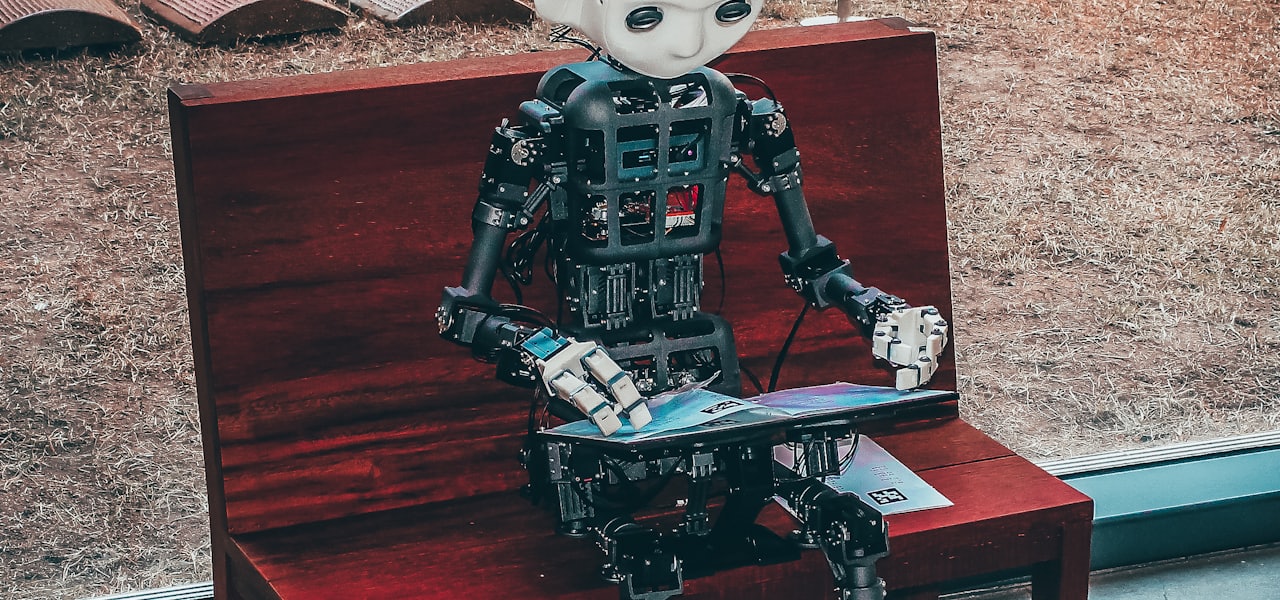
Synthesia Limited is a British multinational artificial intelligence company based in London, United Kingdom. It is a synthetic media-generation software developer and creator of AI-generated video content, including audio-visual agents and cloned avatars. Britain's largest generative-AI firm, it is used by 70% of FTSE 100 and over 90% of Fortune 100 companies. == Overview == Synthesia is most often used by corporations for localized communication, orientation, employee training videos, advertising campaigns, reporting, product demonstrations, customer service, and to create chatbots. Its software algorithm mimics speech and facial movements based on video recordings of an individual’s speech and facial expressions. From this, a text-to-speech video is created to look and sound like the individual. Swiss bank UBS incorporated Synthesia AI-powered avatars of their human financial experts, for instance, in 2025. Users create content via the platform's pre-generated AI presenters or by creating digital representations of themselves, or personal avatars, using the platform's AI video editing tool. These avatars can be used to narrate videos generated from text. As of August 2021, Synthesia's voice database included multiple gender options in over 60 languages. Its free voice library doubled by 2025, to 140 languages and accents, and its Express-Voice technology can clone a user's own voice, or generate a synthetic one. === Deepfakes === The platform prohibits use of its software to create non-consensual clones, including of celebrities or political figures for satirical purposes. Explicit consent must be provided in addition to a strict pre-screening regimen for use of an individual's likeness to avoid “deepfaking”. While the company prohibits use of its technology for misinformation or "news-like content", an October 2023 Freedom House report stated that Synthesia tools had been used by governments in Venezuela, China, Burkina Faso, and Russia to create videos of fake TV news outlets with AI-generated avatars in order to spread propaganda. Actor Dan Dewhirst signed a contract with the company in 2021, becoming one of the first actors whose likeness would be made into an AI avatar, finding his likeness used in the Venezuelan generated-videos. The company stated, in February 2024, that it had improved its misuse detection systems, and, in April 2024, that new users of its technology are screened by the company, and content employing it is further vetted by Synthesia moderators. == History == Synthesia's software utilizes deep learning architecture developed by Lourdes Agapito and Matthias Niessner. The company was co-founded in 2017 by Agapito, Niessner, Victor Riparbelli, and Steffen Tjerrild. In 2018, the company first demonstrated the software's capabilities on the BBC programme Click when it presented a digitization of Matthew Amroliwala speaking Spanish, Mandarin, and Hindi. Through Synthesia's first two years of existence, it employed 10 people and struggled to make sales, leading to an expansion of the company's focus. It moved on from just targeting entertainment studios to a variety of businesses. In 2020, Synthesia users were reported to include Amazon, Tiffany & Co. and IHG Hotels & Resorts. In January 2024, the company introduced its AI video assistant, which turns text-to-video. That April, with a reported 55,000 customers, including half of the Fortune 100, Synthesia launched "expressive avatars". That September, an enhanced dubbing feature was launched, to translate video in 30 languages with naturalized lip-syncing. Peter Hill joined Synthesia as CTO in January 2025, following 25 years at Amazon, and two years as CEO and CPO of Wildfire Studios. That March, a million dollar base of shares was formed to furnish human actors, employed to generate digital avatars, with company stock, which all of its employees hold. By June of that year, 150,000 individuals from among Synthesia's 65,000 customers had created AI-generated avatars of themselves. In July 2025, the company's new global headquarters at Regent’s Place was opened by London mayor Sadiq Khan, who described Britain's largest generative-AI company, then valued at over $2 billion, as a "London success story". By that October, its technology was employed by 90% of the Fortune 100, and Synthesia 3.0 was launched, with hyper-realistic digital avatars equipped with AI-powered dubbing and translation, and a built-in video assistant. In January 2026, it reached a $4 billion valuation, with 70% of FTSE 100 companies noted among its customers. === Funding === The company raised $3.1 million in seed funding in 2019. In April 2021, the company raised $12.5 million in Series A funding. In December 2021, it raised $50 million in a Series B funding round led by Kleiner Perkins and GV (then Google Ventures). Synthesia gained a total valuation of $1 billion, and achieved unicorn status, when it raised $90 million from Accel and Nvidia partnership NVentures, in June 2023, during its Series C funding round. Counting 60,000 customers by January 2025, including over 60% of Fortune 100 companies; the company raised $180 million in a Series D round led by NEA, with new investors World Innovation Lab (WiL), Atlassian Ventures and PSP Growth, as well as existing investors GV, MMC Ventures and FirstMark, doubling Synthesia's valuation to $2.1 billion. Capital raised by 2025 had reached $330 million, with investments slated to further product innovation, talent growth, and company expansion in North America, Europe, Japan and Australia. In April 2025, Adobe Inc. invested £10 million in the company for a strategic partnership. Synthesia subsequently rejected a $3 billion acquisition offer from Adobe, choosing to remain independent. With a revenue stream then exceeding $100 million annually; GV led a Series E funding round in October 2025, resulting in Synthesia's $4 billion valuation, raising $200 million from GV, Nvidia and Accel to develop, in 2026, interactive audio-visual avatar "agents" that converse on topic, for automated sales training and corporate communications, such as recruiting. == Recognition == In 2021, Synthesia partnered with Lay's to create the Messi Messages campaign featuring Argentine footballer Lionel Messi. Users created personalized messages with Synthesia's software and sent custom artificial reality video messages from Messi based on their text input. The campaign received a Cannes Lion Award under the Bronze category. In February 2025, UK Science and Technology Minister Peter Kyle commended Synthesia's "pioneering generative AI innovations."
SUPS
In computational neuroscience, SUPS (for Synaptic Updates Per Second) or formerly CUPS (Connections Updates Per Second) is a measure of a neuronal network performance, useful in fields of neuroscience, cognitive science, artificial intelligence, and computer science. == Computing == For a processor or computer designed to simulate a neural network SUPS is measured as the product of simulated neurons N {\displaystyle N} and average connectivity c {\displaystyle c} (synapses) per neuron per second: S U P S = c × N {\displaystyle SUPS=c\times N} Depending on the type of simulation it is usually equal to the total number of synapses simulated. In an "asynchronous" dynamic simulation if a neuron spikes at υ {\displaystyle \upsilon } Hz, the average rate of synaptic updates provoked by the activity of that neuron is υ c N {\displaystyle \upsilon cN} . In a synchronous simulation with step Δ t {\displaystyle \Delta t} the number of synaptic updates per second would be c N Δ t {\displaystyle {\frac {cN}{\Delta t}}} . As Δ t {\displaystyle \Delta t} has to be chosen much smaller than the average interval between two successive afferent spikes, which implies Δ t < 1 υ N {\displaystyle \Delta t<{\frac {1}{\upsilon N}}} , giving an average of synaptic updates equal to υ c N 2 {\displaystyle \upsilon cN^{2}} . Therefore, spike-driven synaptic dynamics leads to a linear scaling of computational complexity O(N) per neuron, compared with the O(N2) in the "synchronous" case. == Records == Developed in the 1980s Adaptive Solutions' CNAPS-1064 Digital Parallel Processor chip is a full neural network (NNW). It was designed as a coprocessor to a host and has 64 sub-processors arranged in a 1D array and operating in a SIMD mode. Each sub-processor can emulate one or more neurons and multiple chips can be grouped together. At 25 MHz it is capable of 1.28 GMAC. After the presentation of the RN-100 (12 MHz) single neuron chip at Seattle 1991 Ricoh developed the multi-neuron chip RN-200. It had 16 neurons and 16 synapses per neuron. The chip has on-chip learning ability using a proprietary backdrop algorithm. It came in a 257-pin PGA encapsulation and drew 3.0 W at a maximum. It was capable of 3 GCPS (1 GCPS at 32 MHz). In 1991–97, Siemens developed the MA-16 chip, SYNAPSE-1 and SYNAPSE-3 Neurocomputer. The MA-16 was a fast matrix-matrix multiplier that can be combined to form systolic arrays. It could process 4 patterns of 16 elements each (16-bit), with 16 neuron values (16-bit) at a rate of 800 MMAC or 400 MCPS at 50 MHz. The SYNAPSE3-PC PCI card contained 2 MA-16 with a peak performance of 2560 MOPS (1.28 GMAC); 7160 MOPS (3.58 GMAC) when using three boards. In 2013, the K computer was used to simulate a neural network of 1.73 billion neurons with a total of 10.4 trillion synapses (1% of the human brain). The simulation ran for 40 minutes to simulate 1 s of brain activity at a normal activity level (4.4 on average). The simulation required 1 Petabyte of storage.
Strategic Air Command Digital Information Network
The Strategic Air Command DIgital Network (SACDIN) was a United States military computer network that provided computerized record communications, replacing the Data Transmission Subsystem and part of the Data Display Subsystem of the SAC Automated Command and Control System. SACDIN enabled a rapid flow of communications from headquarters SAC to its fielded forces, such as B-52 bases and ICBM Launch Control Centers. == Logistics == Major portions of SACDIN were developed, engineered and installed by the International Telephone and Telegraph (ITT) company, under contract to the Electronic Systems Center. == Chronology == 1969 - Headquarters SAC submits a request to the Joint Chiefs of Staff to study an expanded communications system, known as the SAC Total Information Network (SATIN). It would interconnect Air Force Satellite Communications (AFSATCOM), Advanced Airborne Command Post (AABNCP), Airborne Command Post (ABNCP), high frequency/single sideband radio HF/SSB radio, SAC Automated Command and Control System (SACCS), Automatic Digital Information Network (AUTODIN), Survivable Low Frequency Communications System (SLFCS) and Command Data Buffer (CDB) 1977 1 November - SATIN IV was effectively terminated by Congress. The restructured program was renamed SAC Digital Network (SACDIN), and was formulated to meet SAC's minimum essential data communications requirements, but also had the capability to grow in a modular fashion. 1986 ?? ??? - SACDIN replaces much of the SAC Automated Command and Control System (SACCS) and the SAC Automated Total Information Network (SATIN)
SFINKS
Sfinks (Polish for "Sphynx") was also the initial name of the Janusz A. Zajdel Award In cryptography, SFINKS is a stream cypher algorithm developed by An Braeken, Joseph Lano, Nele Mentens, Bart Preneel, and Ingrid Verbauwhede. It includes a message authentication code. It has been submitted to the eSTREAM Project of the eCRYPT network. In 2005, Nicolas T. Courtois noted that, while the cipher is elegant and secure against some simple algebraic attacks, it is vulnerable to more elaborate known attacks.
Hilscher netx network controller
The netX network controller family (based on ASICs), developed by Hilscher Gesellschaft für Systemautomation mbH, is a solution for implementing all proven Fieldbus and Real-Time Ethernet systems. It was the first Multi-Protocol ASIC which combines Real-Time-Ethernet and Fieldbus System in one solution. The Multiprotocol functionality is done over a flexible cpu sub system called XC. Through exchanging some microcode the XC is able to realize beside others a PROFINET IRT Switch, EtherCAT Slave, Ethernet Powerlink HUB, PROFIBUS, CAN bus, CC-Link Industrial Networks Interface. == The Hilscher netX family == === Multiplex Matrix IOs (MMIO) === The Multiplex Matrix is a set of PINs which could be configured freely with peripheral functions. Options are CAN, UART, SPI, I2C, GPIOs, PIOs and SYNC Trigger. === GPIOs === The GPIOs from Hilscher are able to generate Interrupts, could count level or flags, or could be connected to a timer unit to auto generate a PWM. The Resolution of the PWM is normally 10ns. In some netX ASICS is a dedicated Motion unit with a resolution if 1ns is available.
Automated dispensing cabinet
An automated dispensing cabinet (ADC), also called a unit-based cabinet (UBC), automated dispensing device (ADD), or automated dispensing machine (ADM)[1], is a computerized medicine cabinet for hospitals and healthcare settings. ADCs allow medications to be stored and dispensed near the point of care while controlling and tracking drug distribution. == Overview == Hospital pharmacies have provided medications for patients by filling patient-specific cassettes of unit-dose medications that were then delivered to the nursing unit and stored in medication cabinets or carts. ADCs, originally designed for hospital use, were introduced in hospitals in the 1980s and have facilitated the transition to alternative delivery models and more decentralized medication distribution systems.[2] Implementing automated dispensing cabinets as part of a decentralized or hybrid medication distribution system can improve patient safety and the accountability of the inventory, streamline certain billing processes. However, in the 2000s, the technology began to be deployed into other care settings where medication doses were stored onsite, and higher security methods were needed to control inventory, access, and dispensing of each patient dose. Settings that now deploy ADCs include long-term care facilities, hospice, critical access hospitals, surgery centers, group homes, residential care facilities, rehab and psych environments, animal health, dental clinics, and nursing education simulation. These diverse care settings share a common need to safely store, account for, and dispense individual doses of medications, especially narcotics and high-value medications, at the point of care.[3] ADCs track user access and dispensed medications, and their use can improve control over medication inventory. The real-time inventory reports generated by many cabinets can simplify the filling process and help the pharmacy track expired drugs. Furthermore, by restricting individual drugs – such as high-risk medications and controlled substances – to unique drawers within the cabinet, overall inventory management, patient safety, and medication security can be improved. Automated dispensing cabinets allow the pharmacy department to profile physician orders before they are dispensed.[4] ADCs can also enable providers to record medication charges upon dispensing, reducing the billing paperwork the pharmacy is responsible for. In addition, nurses can note returned medications using the cabinets' computers, enabling direct credits to patients' accounts. Since automated cabinets can be located on the nursing unit floor, nursing have speedier access to a patient's medications. Also, shorter waiting time ensures improved patient comfort and care.[5] == Role of automated dispensing in healthcare == Automated dispensing is a pharmacy practice in which a device dispenses medications and fills prescriptions. ADCs, which can handle many different medications, are available from a number of manufacturers such as BD, ARxIUM, and Omnicell. Though members of the pharmacy community have been utilizing automation technology since the 1980s, companies are constantly improving ADCs to meet changing needs and health standards in the industry. Several goals can be met by implementing an automated product in a healthcare facility. Patient safety can be ensured with the use of ADC technology such as barcoding. Anesthesia ADCs in operating rooms and perioperative areas may include label printing to prevent mix-ups such as errors between morphine and hydromorphone, two different opioid analgesics that frequently get confused. These systems also communicate with the pharmacy and its information management system to track medications removed and support inventory replenishment. == Key features == ADCs are like automated teller machines whose specific technologies such as barcode scanning and clinical decision support can improve medication safety. Some have metal locking drawers for added security and some have automated single-dose dispensing to prevent the need for a blind count each time a controlled substance is accessed. Over the years, ADCs have been adapted to facilitate compliance with emerging regulatory requirements such as pharmacy review of medication orders and safe practice recommendations. ADCs incorporate advanced software and electronic interfaces to synthesize high-risk steps in the medication use process. These unit-based medication repositories provide computer-controlled storage, dispensation, tracking, and documentation of medication distribution in the resident care unit. Since automated dispensing cabinets are not located in the pharmacy, they are considered "decentralized" medication distribution systems. Instead, they can be found at the point of care on the resident care unit. Tracking of the stocking and distribution process can occur by interfacing the unit with a central pharmacy computer. These cabinets can also be interfaced with other external databases such as resident profiles, the facility's admission/discharge/transfer system, and billing systems. Most ADC providers offer scalable systems since several important factors vary widely by facility such as budget, physical room size, patient population/demographics, type of healthcare facility, etc.
Sentiment analysis
Sentiment analysis (also known as opinion mining) is the use of natural language processing, text analysis, computational linguistics, and biometrics to systematically identify, extract, quantify, and study affective states and subjective information. Sentiment analysis is widely applied to voice of the customer materials such as reviews and survey responses, online and social media, and healthcare materials for applications that range from marketing to customer service to clinical medicine. With the rise of deep language models, such as RoBERTa, more difficult data domains can be analyzed, e.g., news texts where authors typically express their opinion/sentiment less explicitly. == Types == A basic task in sentiment analysis is classifying the polarity of a given text at the document, sentence, or feature/aspect level—whether the expressed opinion in a document, a sentence or an entity feature/aspect is positive, negative, or neutral. Advanced, "beyond polarity" sentiment classification looks, for instance, at emotional states such as enjoyment, anger, disgust, sadness, fear, and surprise. Precursors to sentimental analysis include the General Inquirer, which provided hints toward quantifying patterns in text and, separately, psychological research that examined a person's psychological state based on analysis of their verbal behavior. Subsequently, the method described in a patent by Volcani and Fogel, looked specifically at sentiment and identified individual words and phrases in text with respect to different emotional scales. A current system based on their work, called EffectCheck, presents synonyms that can be used to increase or decrease the level of evoked emotion in each scale. Many other subsequent efforts were less sophisticated, using a mere polar view of sentiment, from positive to negative, such as work by Turney, and Pang who applied different methods for detecting the polarity of product reviews and movie reviews respectively. This work is at the document level. One can also classify a document's polarity on a multi-way scale, which was attempted by Pang and Snyder among others: Pang and Lee expanded the basic task of classifying a movie review as either positive or negative to predict star ratings on either a 3- or a 4-star scale, while Snyder performed an in-depth analysis of restaurant reviews, predicting ratings for various aspects of the given restaurant, such as the food and atmosphere (on a five-star scale). First steps to bringing together various approaches—learning, lexical, knowledge-based, etc.—were taken in the 2004 AAAI Spring Symposium where linguists, computer scientists, and other interested researchers first aligned interests and proposed shared tasks and benchmark data sets for the systematic computational research on affect, appeal, subjectivity, and sentiment in text. Even though in most statistical classification methods, the neutral class is ignored under the assumption that neutral texts lie near the boundary of the binary classifier, several researchers suggest that, as in every polarity problem, three categories must be identified. Moreover, it can be proven that specific classifiers such as the Max Entropy and SVMs can benefit from the introduction of a neutral class and improve the overall accuracy of the classification. There are in principle two ways for operating with a neutral class. Either, the algorithm proceeds by first identifying the neutral language, filtering it out and then assessing the rest in terms of positive and negative sentiments, or it builds a three-way classification in one step. This second approach often involves estimating a probability distribution over all categories (e.g. naive Bayes classifiers as implemented by the NLTK). Whether and how to use a neutral class depends on the nature of the data: if the data is clearly clustered into neutral, negative and positive language, it makes sense to filter the neutral language out and focus on the polarity between positive and negative sentiments. If, in contrast, the data are mostly neutral with small deviations towards positive and negative affect, this strategy would make it harder to clearly distinguish between the two poles. A different method for determining sentiment is the use of a scaling system whereby words commonly associated with having a negative, neutral, or positive sentiment are given an associated number on a −10 to +10 scale (most negative up to most positive) or simply from 0 to a positive upper limit such as +4. This makes it possible to adjust the sentiment of a given term relative to its environment (usually on the level of the sentence). When a piece of unstructured text is analyzed using natural language processing, each concept in the specified environment is given a score based on the way sentiment words relate to the concept and its associated score. This allows movement to a more sophisticated understanding of sentiment, because it is now possible to adjust the sentiment value of a concept relative to modifications that may surround it. Words, for example, that intensify, relax or negate the sentiment expressed by the concept can affect its score. Alternatively, texts can be given a positive and negative sentiment strength score if the goal is to determine the sentiment in a text rather than the overall polarity and strength of the text. There are various other types of sentiment analysis, such as aspect-based sentiment analysis, grading sentiment analysis (positive, negative, neutral), multilingual sentiment analysis and detection of emotions. === Subjectivity/objectivity identification === This task is commonly defined as classifying a given text (usually a sentence) into one of two classes: objective or subjective. This problem can sometimes be more difficult than polarity classification. The subjectivity of words and phrases may depend on their context and an objective document may contain subjective sentences (e.g., a news article quoting people's opinions). Moreover, as mentioned by Su, results are largely dependent on the definition of subjectivity used when annotating texts. However, Pang showed that removing objective sentences from a document before classifying its polarity helped improve performance. Subjective and objective identification, emerging subtasks of sentiment analysis to use syntactic, semantic features, and machine learning knowledge to identify if a sentence or document contains facts or opinions. Awareness of recognizing factual and opinions is not recent, having possibly first presented by Carbonell at Yale University in 1979. The term objective refers to the incident carrying factual information. Example of an objective sentence: 'To be elected president of the United States, a candidate must be at least thirty-five years of age.' The term subjective describes the incident contains non-factual information in various forms, such as personal opinions, judgment, and predictions, also known as 'private states'. In the example down below, it reflects a private states 'We Americans'. Moreover, the target entity commented by the opinions can take several forms from tangible product to intangible topic matters stated in Liu (2010). Furthermore, three types of attitudes were observed by Liu (2010), 1) positive opinions, 2) neutral opinions, and 3) negative opinions. Example of a subjective sentence: 'We Americans need to elect a president who is mature and who is able to make wise decisions.' This analysis is a classification problem. Each class's collections of words or phrase indicators are defined for to locate desirable patterns on unannotated text. For subjective expression, a different word list has been created. Lists of subjective indicators in words or phrases have been developed by multiple researchers in the linguist and natural language processing field states in Riloff et al. (2003). A dictionary of extraction rules has to be created for measuring given expressions. Over the years, in subjective detection, the features extraction progression from curating features by hand to automated features learning. At the moment, automated learning methods can further separate into supervised and unsupervised machine learning. Patterns extraction with machine learning process annotated and unannotated text have been explored extensively by academic researchers. However, researchers recognized several challenges in developing fixed sets of rules for expressions respectably. Much of the challenges in rule development stems from the nature of textual information. Six challenges have been recognized by several researchers: 1) metaphorical expressions, 2) discrepancies in writings, 3) context-sensitive, 4) represented words with fewer usages, 5) time-sensitive, and 6) ever-growing volume. Metaphorical expressions. The text contains metaphoric expression may impact on the performance on the extraction. Besides, metaphors take in different forms, which may have been contribu