Abdul Majid Bhurgri Institute of Language Engineering (Sindhi: عبدالماجد ڀرڳڙي انسٽيٽيوٽ آف لئنگئيج انجنيئرنگ) is an autonomous body under the administrative control of the Culture, Tourism and Antiquities Department, Government of Sindh established for bringing Sindhi language at par with national and international languages in all computational process and Natural language processing. == Establishment == In recognition to services of Abdul-Majid Bhurgri, who is the founder of Sindhi computing, Government of Sindh has established the institute after his name. The institute was primarily initiated on the concept given by a language engineer and linguist Amar Fayaz Buriro in briefing to the Minister, Culture, Tourism and Antiquities, Government of Sindh, Syed Sardar Ali Shah on 21 February 2017 on celebration of International Mother Language Day in Sindhi Language Authority, Hyderabad, Sindh. After the presentation and concept given by Amar Fayaz Buriro, the minister Syed Sardar Ali Shah had announced the Institute. Then, Government of Sindh added the development scheme in the Budget of fiscal year 2017-2018. == Projects == The Institute has developed several projects aimed at advancing the Sindhi language and promoting linguistic research. Notable initiatives include the AMBILE Hamiz Ali Sindhi Optical character recognition, which allows for the accurate digitization of Sindhi text, and the ongoing Sindhi WordNet System, a project to build a comprehensive lexical database for Natural language processing. The institute has also created the Font, which integrates symbols from the Indus script, Khudabadi script, and modern Perso-Arabic Script Code for Information Interchange into a single resource for researchers]. Additionally, institute has developed online converter tools that automatically transliterate between the Arabic-Perso script and Devanagari script, improving linguistic accessibility. Another key project is Bhittaipedia, a digital platform dedicated to the preservation and dissemination of the poetry of Shah Abdul Latif Bhittai, one of Sindh's most renowned poet. == Location == The institute is established behind Sindh Museum and Sindhi Language Authority, N-5 National Highway, Qasimabad, Hyderabad, Sindh.
Unfold (app)
Unfold is a mobile application that allows users to create social media content using a variety of templates and other tools. It was founded in 2018 by Alfonso Cobo and Andy McCune. It enables users to add photos, video, and text with a variety of tools. In 2019, Unfold was acquired by Squarespace. == History == In January 2017, Alfonso Cobo was studying at Parsons School of Design when he realized there was no software or app that could create a portfolio of his work on an iPad. Cobo created an app called Portfolio, a basic version of a portfolio layout app, and the first one to exist for iPad. He launched it in 2017. After launching the first version of Portfolio, Cobo realized the more popular market and use case was on mobile. Around that time, Instagram was launching Stories. As a result, Cobo pivoted the app away from portfolios and instead focused on an app to showcase one's stories. Cobo later contacted Andy McCune, founder of social media account Earth, to collaborate with Unfold. Unfold also partnered with various companies to create custom templates. These include Equinox, Tommy Hilfiger, NARS, Billboard Music Awards, and Product Red. Unfold also launched a collection of Product Red templates to help eliminate HIV/AIDS in several African countries. In 2019, Squarespace acquired Unfold. The Unfold app has been downloaded over 60 million times and has been used to create over 1 billion Instagram stories. == Features == With Unfold, users can utilize hundreds of templates to make social content for social media platforms such as Instagram, Snapchat, and Facebook. The free app offers users basic templates and standard fonts, filters, and stickers, and there are also premium templates available for a monthly subscription. With Unfold+ and Unfold Pro (previously Unfold for Brands), users can access premium templates and tools, as well as upload custom brand assets and fonts. In 2020, Unfold launched Bio Sites, which allows users to link to multiple sites and platforms.
Automated machine learning
Automated machine learning (AutoML) is the process of automating the tasks of applying machine learning to real-world problems. It is the combination of automation and ML. AutoML potentially includes every stage from beginning with a raw dataset to building a machine learning model ready for deployment. AutoML was proposed as an artificial intelligence-based solution to the growing challenge of applying machine learning. The high degree of automation in AutoML aims to allow non-experts to make use of machine learning models and techniques without requiring them to become experts in machine learning. Automating the process of applying machine learning end-to-end additionally offers the advantages of producing simpler solutions, faster creation of those solutions, and models that often outperform hand-designed models. Common techniques used in AutoML include hyperparameter optimization, meta-learning and neural architecture search. == Comparison to the standard approach == In a typical machine learning application, practitioners have a set of input data points to be used for training. The raw data may not be in a form that all algorithms can be applied to. To make the data amenable for machine learning, an expert may have to apply appropriate data pre-processing, feature engineering, feature extraction, and feature selection methods. After these steps, practitioners must then perform algorithm selection and hyperparameter optimization to maximize the predictive performance of their model. If deep learning is used, the architecture of the neural network must also be chosen manually by the machine learning expert. Each of these steps may be challenging, resulting in significant hurdles to using machine learning. AutoML aims to simplify these steps for non-experts, and to make it easier for them to use machine learning techniques correctly and effectively. AutoML plays an important role within the broader approach of automating data science, which also includes challenging tasks such as data engineering, data exploration and model interpretation and prediction. == Targets of automation == Automated machine learning can target various stages of the machine learning process. Steps to automate are: Data preparation and ingestion (from raw data and miscellaneous formats) Column type detection; e.g., Boolean, discrete numerical, continuous numerical, or text Column intent detection; e.g., target/label, stratification field, numerical feature, categorical text feature, or free text feature Task detection; e.g., binary classification, regression, clustering, or ranking Feature engineering Feature selection Feature extraction Meta-learning and transfer learning Detection and handling of skewed data and/or missing values Model selection - choosing which machine learning algorithm to use, often including multiple competing software implementations Ensembling - a form of consensus where using multiple models often gives better results than any single model Hyperparameter optimization of the learning algorithm and featurization Neural architecture search Pipeline selection under time, memory, and complexity constraints Selection of evaluation metrics and validation procedures Problem checking Leakage detection Misconfiguration detection Analysis of obtained results Creating user interfaces and visualizations == Challenges and Limitations == There are a number of key challenges being tackled around automated machine learning. A big issue surrounding the field is referred to as "development as a cottage industry". This phrase refers to the issue in machine learning where development relies on manual decisions and biases of experts. This is contrasted to the goal of machine learning which is to create systems that can learn and improve from their own usage and analysis of the data. Basically, it's the struggle between how much experts should get involved in the learning of the systems versus how much freedom they should be giving the machines. However, experts and developers must help create and guide these machines to prepare them for their own learning. To create this system, it requires labor intensive work with knowledge of machine learning algorithms and system design. Additionally, other challenges include meta-learning and computational resource allocation.
Neurorobotics
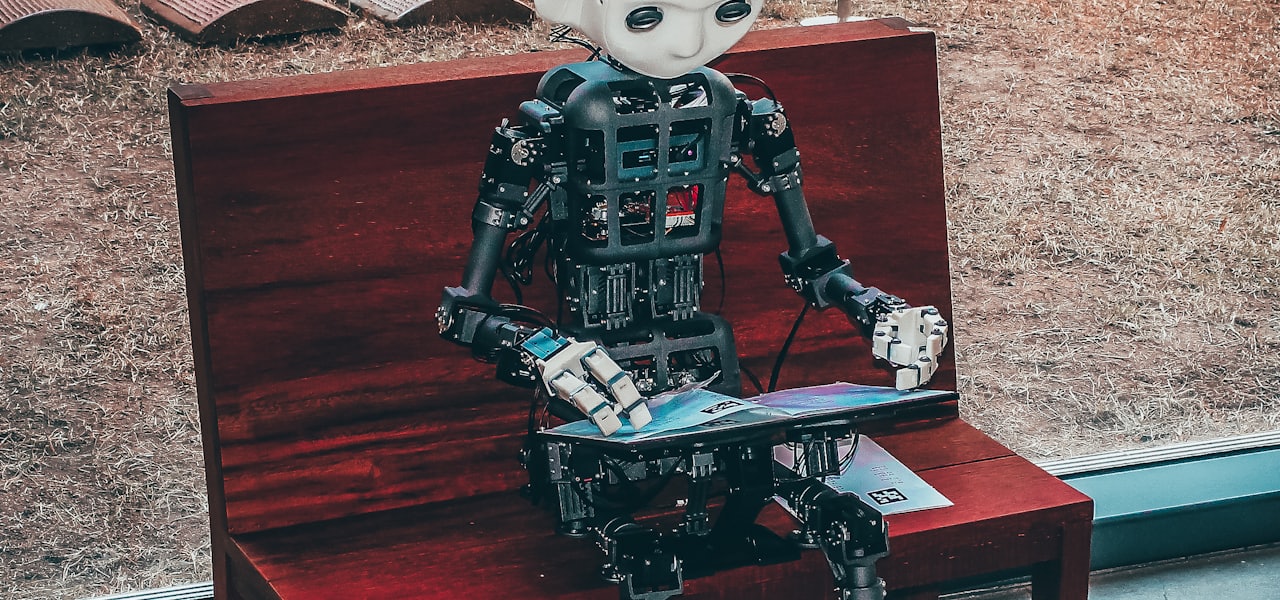
Neurorobotics is the combined study of neuroscience, robotics, and artificial intelligence. It is the science and technology of embodied autonomous neural systems. Neural systems include brain-inspired algorithms (e.g. connectionist networks), computational models of biological neural networks (e.g. artificial spiking neural networks, large-scale simulations of neural microcircuits) and actual biological systems (e.g. in vivo and in vitro neural nets). Such neural systems can be embodied in machines with mechanic or any other forms of physical actuation. This includes robots, prosthetic or wearable systems but also, at smaller scale, micro-machines and, at the larger scales, furniture and infrastructures. Neurorobotics is that branch of neuroscience with robotics, which deals with the study and application of science and technology of embodied autonomous neural systems like brain-inspired algorithms. It is based on the idea that the brain is embodied and the body is embedded in the environment. Therefore, most neurorobots are required to function in the real world, as opposed to a simulated environment. Beyond brain-inspired algorithms for robots neurorobotics may also involve the design of brain-controlled robot systems. == Major classes of models == Neurorobots can be divided into various major classes based on the robot's purpose. Each class is designed to implement a specific mechanism of interest for study. Common types of neurorobots are those used to study motor control, memory, action selection, and perception. === Locomotion and motor control === Neurorobots are often used to study motor feedback and control systems, and have proved their merit in developing controllers for robots. Locomotion is modeled by a number of neurologically inspired theories on the action of motor systems. Locomotion control has been mimicked using models or central pattern generators, clumps of neurons capable of driving repetitive behavior, to make four-legged walking robots. Other groups have expanded the idea of combining rudimentary control systems into a hierarchical set of simple autonomous systems. These systems can formulate complex movements from a combination of these rudimentary subsets. This theory of motor action is based on the organization of cortical columns, which progressively integrate from simple sensory input into a complex afferent signals, or from complex motor programs to simple controls for each muscle fiber in efferent signals, forming a similar hierarchical structure. Another method for motor control uses learned error correction and predictive controls to form a sort of simulated muscle memory. In this model, awkward, random, and error-prone movements are corrected for using error feedback to produce smooth and accurate movements over time. The controller learns to create the correct control signal by predicting the error. Using these ideas, robots have been designed which can learn to produce adaptive arm movements or to avoid obstacles in a course. === Learning and memory systems === Robots designed to test theories of animal memory systems. Many studies examine the memory system of rats, particularly the rat hippocampus, dealing with place cells, which fire for a specific location that has been learned. Systems modeled after the rat hippocampus are generally able to learn mental maps of the environment, including recognizing landmarks and associating behaviors with them, allowing them to predict the upcoming obstacles and landmarks. Another study has produced a robot based on the proposed learning paradigm of barn owls for orientation and localization based on primarily auditory, but also visual stimuli. The hypothesized method involves synaptic plasticity and neuromodulation, a mostly chemical effect in which reward neurotransmitters such as dopamine or serotonin affect the firing sensitivity of a neuron to be sharper. The robot used in the study adequately matched the behavior of barn owls. Furthermore, the close interaction between motor output and auditory feedback proved to be vital in the learning process, supporting active sensing theories that are involved in many of the learning models. Neurorobots in these studies are presented with simple mazes or patterns to learn. Some of the problems presented to the neurorobot include recognition of symbols, colors, or other patterns and execute simple actions based on the pattern. In the case of the barn owl simulation, the robot had to determine its location and direction to navigate in its environment. === Action selection and value systems === Action selection studies deal with negative or positive weighting to an action and its outcome. Neurorobots can and have been used to study simple ethical interactions, such as the classical thought experiment where there are more people than a life raft can hold, and someone must leave the boat to save the rest. However, more neurorobots used in the study of action selection contend with much simpler persuasions such as self-preservation or perpetuation of the population of robots in the study. These neurorobots are modeled after the neuromodulation of synapses to encourage circuits with positive results. In biological systems, neurotransmitters such as dopamine or acetylcholine positively reinforce neural signals that are beneficial. One study of such interaction involved the robot Darwin VII, which used visual, auditory, and a simulated taste input to "eat" conductive metal blocks. The arbitrarily chosen good blocks had a striped pattern on them while the bad blocks had a circular shape on them. The taste sense was simulated by conductivity of the blocks. The robot had positive and negative feedbacks to the taste based on its level of conductivity. The researchers observed the robot to see how it learned its action selection behaviors based on the inputs it had. Other studies have used herds of small robots which feed on batteries strewn about the room, and communicate its findings to other robots. === Sensory perception === Neurorobots have also been used to study sensory perception, particularly vision. These are primarily systems that result from embedding neural models of sensory pathways in automatas. This approach gives exposure to the sensory signals that occur during behavior and also enables a more realistic assessment of the degree of robustness of the neural model. It is well known that changes in the sensory signals produced by motor activity provide useful perceptual cues that are used extensively by organisms. For example, researchers have used the depth information that emerges during replication of human head and eye movements to establish robust representations of the visual scene. == Biological robots == Biological robots are not officially neurorobots in that they are not neurologically inspired AI systems, but actual neuron tissue wired to a robot. This employs the use of cultured neural networks to study brain development or neural interactions. These typically consist of a neural culture raised on a multielectrode array (MEA), which is capable of both recording the neural activity and stimulating the tissue. In some cases, the MEA is connected to a computer which presents a simulated environment to the brain tissue and translates brain activity into actions in the simulation, as well as providing sensory feedback The ability to record neural activity gives researchers a window into a brain, which they can use to learn about a number of the same issues neurorobots are used for. An area of concern with the biological robots is ethics. Many questions are raised about how to treat such experiments. The central question concerns consciousness and whether or not the rat brain experiences it. There are many theories about how to define consciousness. == Implications for neuroscience == Neuroscientists benefit from neurorobotics because it provides a blank slate to test various possible methods of brain function in a controlled and testable environment. While robots are more simplified versions of the systems they emulate, they are more specific, allowing more direct testing of the issue at hand. They also have the benefit of being accessible at all times, while it is more difficult to monitor large portions of a brain while the human or animal is active, especially individual neurons. The development of neuroscience has produced neural treatments. These include pharmaceuticals and neural rehabilitation. Progress is dependent on an intricate understanding of the brain and how exactly it functions. It is difficult to study the brain, especially in humans, due to the danger associated with cranial surgeries. Neurorobots can improved the range of tests and experiments that can be performed in the study of neural processes.
Environmental impact of AI
The environmental impact of the design, training, deployment and use of artificial intelligence includes the greenhouse gas emissions from generating electricity for data centres and computing hardware, operational and upstream water use, and material impacts from hardware manufacturing, mining and electronic waste. Estimating AI's environmental effects can be difficult because results depend on how impacts are measured, including whether accounting includes only model computation or also data-centre overhead, idle capacity, hardware manufacture, and local electricity supply. As these issues have received greater attention, governments and regulators have increasingly considered data-centre reporting requirements, energy-efficiency standards, and broader transparency measures for AI-related resource use. == Carbon footprint and energy use == AI-related energy use arises at multiple stages, including model training, fine-tuning, inference, storage, networking, and supporting infrastructure such as cooling and power conversion. === Individual level === Published estimates of energy use per AI request vary widely across models, tasks and measurement methods. A benchmark study presented at the 2024 ACM Conference on Fairness, Accountability, and Transparency found substantial differences between task types, with lower energy use for some text tasks and much higher energy use for image generation in the study's test conditions. In that benchmark, simple classification tasks consumed about 0.002–0.007 Wh per prompt on average (about 9% of a smartphone charge for 1,000 prompts), while text generation and text summarisation each used about 0.05 Wh per prompt; image generation averaged 2.91 Wh per prompt, and the least efficient image model in the study used 11.49 Wh per image (roughly equivalent to half a smartphone charge). First-party measurements in production environments have also been published. A 2025 Google study on Gemini assistant serving reported median per-prompt energy, emissions, and water-use estimates under the authors' accounting framework, while noting that different system boundaries can produce substantially different results. The study reported a median text-prompt estimate of about 0.24 Wh, which is roughly as much energy as watching nine seconds of television. The study also stated that software and infrastructure improvements reduced energy use by a factor of 33 and carbon emissions by a factor of 44 for a typical prompt over one year within the authors' framework. Researchers at the University of Michigan measured the energy consumption of various Meta Llama 3.1 models released in 2024 and found that smaller language models (8 billion parameters) use about 114 joules (0.03167 Wh) per response, while larger models (405 billion parameters) require up to 6,700 joules (1.861 Wh) per response. This corresponds to the energy needed to run a microwave oven for roughly one-tenth of a second and eight seconds, respectively. Comparisons between AI systems and human labour for specific tasks have produced mixed results and remain sensitive to assumptions about output quality, workload and system boundaries. A 2024 study in Scientific Reports reported 130 to 2900 times lower estimated carbon emissions for selected AI systems than for human writers and illustrators under its assumptions. A later Scientific Reports paper reported a counterexample for programming tasks under its assumptions, finding 5 to 19 times higher estimated emissions for the evaluated AI system than for human programmers on the benchmark used in that study. === System level === ==== Energy use and efficiency ==== AI electricity intensity depends not only on model architecture but also on hardware and facility efficiency. Data-centre operators commonly report Power usage effectiveness (PUE), which measures the ratio of total facility energy to IT equipment energy; a lower PUE indicates less overhead energy for cooling and other supporting infrastructure. Operators may also publish metrics and case studies on hardware efficiency, cooling systems and power sourcing. In its 2024 environmental report, Google stated that its 2023 total greenhouse gas emissions increased 13% year over year, primarily because of increased data-centre energy consumption and supply-chain emissions, while also reporting lower PUE than industry averages for its own facilities. The International Energy Agency has also reported that data centres remain a relatively small share of global electricity use overall, but that their local effects can be much more pronounced because demand is geographically concentrated. ==== Carbon footprint ==== At system level, AI contributes to rising electricity demand in data centres and related infrastructure. The International Energy Agency estimated that data centres used about 415 TWh of electricity in 2024, or around 1.5% of global electricity consumption, and projected that data-centre electricity use could rise to about 945 TWh by 2030, with AI identified as the main driver of that growth alongside other digital services. The carbon footprint of AI systems depends strongly on electricity sources, hardware efficiency, utilisation rates, and what stages are included in the accounting. Training large models can require substantial electricity, while total lifecycle impacts also depend on deployment scale and the amount of inference performed after training. Early analyses of frontier-model development reported rapid historical growth in training compute for selected systems, although later trends have depended on changes in model design, hardware and efficiency gains. Accounting methods that include upstream or embodied impacts, such as hardware manufacture and facilities construction, can materially affect estimates of AI-related emissions. === Decisions and strategies by individual companies === Large technology companies have reported that the expansion of AI and cloud infrastructure affects their sustainability targets, electricity demand, and resource use. Google, for example, attributed part of its emissions growth in 2023 to increased data-centre energy consumption and supply-chain emissions in its 2024 environmental report. Cloud and AI companies have also announced measures intended to reduce environmental impacts, including investment in more efficient hardware, low-carbon electricity procurement, alternative cooling systems, and water stewardship programmes. The extent, comparability, and third-party verification of such disclosures vary between firms and jurisdictions. == Water usage == Data centres can use water directly for cooling and indirectly through the water used in electricity generation, depending on the local energy mix. Public reporting on data-centre water use has often been inconsistent, making comparisons between operators and regions difficult. To standardise operational reporting, The Green Grid proposed the metric water usage effectiveness (WUE), defined as annual site water use divided by IT equipment energy use. WUE does not by itself measure local water stress, source sustainability, or all upstream water impacts. Studies of AI water use also distinguish between water withdrawal and water consumption. Research on AI-specific water use has argued that the water footprint of AI systems can be difficult to observe and may vary substantially by location, cooling design, and electricity source. A 2025 Communications of the ACM article summarised methods for estimating AI water footprints and emphasised the distinction between water withdrawal and water consumption. Li and colleagues estimated that global AI water withdrawal could reach 4.2–6.6 billion cubic metres in 2027 under the scenarios examined in their article. Using GPT-3, released by OpenAI in 2020, as an example, they estimated that training the model in Microsoft's U.S. data centres could consume about 700,000 litres of onsite water and about 5.4 million litres in total when offsite electricity-related water use was included; they also estimated that 10–50 medium-length GPT-3 responses could consume about 500 mL of water, depending on when and where the model was deployed. Published prompt-level estimates have also varied by system and accounting framework: the 2025 Google study on Gemini assistant serving reported a median text-prompt estimate of about 0.26 mL under its framework. Location can materially affect the significance of data-centre water use. Research on U.S. data centres found that one-fifth of servers' direct water footprint came from moderately to highly water-stressed watersheds, while nearly half of servers were fully or partially powered by plants located in water-stressed regions. A 2025 Reuters report, citing data from Verisk Maplecroft and NatureFinance, said that an average mid-sized data centre uses about 1.4 million litres of water per day for cooling and that Phoenix would experience a 32% increase in annual water stress if currently pl
SeaTable
SeaTable is a no-code platform that allows users to develop and implement business processes. The cloud collaboration service SeaTable is marketed by the GmbH of the same name with headquarters in Mainz and additional offices in Berlin and Beijing, and developed by the same company as Seafile. == History == SeaTable is a collaborative database and low-code application platform developed as part of a joint venture between Seafile Ltd., a software company based in Guangzhou, China, and SeaTable GmbH, a German firm headquartered in Mainz. Founded in 2020, the project represents the international expansion of Seafile, a Chinese developer originally known for its file synchronization and sharing software. While SeaTable's cloud services and European client operations are managed by the German entity, the platform itself is developed in China by Seafile's engineering team. This cross-border structure, described by TechCrunch as an “unconventional path” for a Chinese startup expanding abroad, reflects Seafile's effort to maintain its product development in China while addressing growing scrutiny in Western markets over data governance and corporate control. In 2021, an innovation project led by the Cyber Innovation Hub at the IT School of the German Armed Forces started to evaluate the possibilities of a large-scale deployment at the German Armed Forces. The evaluation project is currently still ongoing. In 2022, SeaTable is optimizing its database backend to allow millions of records within one base in the future. The focus of development is increasingly on automation and visualization. In 2025, SeaTable introduced AI-powered automations with version 6. The update enabled the integration of large language models (LLMs) for text analysis and automated decision-making. SeaTable operates a self-hosted LLM on servers provided by Hetzner (Germany), while self-hosted deployments can connect to any compatible model. == Features == SeaTable combines the traditional capabilities of a spreadsheet such as Excel and supplements them with a wide range of functions for process automation and visualization as well as a fully comprehensive API. SeaTable is not a pure cloud solution, but can alternatively be installed on a private server and operated completely autonomously. In this way, the owner retains full control over their own data. The installation is done via Docker on a Linux server. == Security and privacy == While most no-code platforms exist only as SaaS solutions, SeaTable describes itself as a data-sparse European solution. While initially the SeaTable Cloud was hosted on Amazon AWS, the move to the German data centers of Swiss provider Exoscale then took place in May 2021. This was followed by the replacement of the Freshdesk cloud ticketing system with a self-hosted Zammad instance, and since April 2022 SeaTable has completely dispensed with all tracking cookies on its website.
Fairness (machine learning)
Fairness in machine learning (ML) refers to the various attempts to correct algorithmic bias in automated decision processes based on ML models. Decisions made by such models after a learning process may be considered unfair if they were based on variables considered sensitive (e.g., gender, ethnicity, sexual orientation, or disability). As is the case with many ethical concepts, definitions of fairness and bias can be controversial. In general, fairness and bias are considered relevant when the decision process impacts people's lives. Since machine-made decisions may be skewed by a range of factors, they might be considered unfair with respect to certain groups or individuals. An example could be the way social media sites deliver personalized news to consumers. == Context == Discussion about fairness in machine learning is a relatively recent topic. Since 2016 there has been a sharp increase in research into the topic. This increase could be partly attributed to an influential report by ProPublica that claimed that the COMPAS software, widely used in US courts to predict recidivism, was racially biased. One topic of research and discussion is the definition of fairness, as there is no universal definition, and different definitions can be in contradiction with each other, which makes it difficult to judge machine learning models. Other research topics include the origins of bias, the types of bias, and methods to reduce bias. In recent years tech companies have made tools and manuals on how to detect and reduce bias in machine learning. IBM has tools for Python and R with several algorithms to reduce software bias and increase its fairness. Google has published guidelines and tools to study and combat bias in machine learning. Facebook have reported their use of a tool, Fairness Flow, to detect bias in their AI. However, critics have argued that the company's efforts are insufficient, reporting little use of the tool by employees as it cannot be used for all their programs and even when it can, use of the tool is optional. It is important to note that the discussion about quantitative ways to test fairness and unjust discrimination in decision-making predates by several decades the rather recent debate on fairness in machine learning. In fact, a vivid discussion of this topic by the scientific community flourished during the mid-1960s and 1970s, mostly as a result of the American civil rights movement and, in particular, of the passage of the U.S. Civil Rights Act of 1964. However, by the end of the 1970s, the debate largely disappeared, as the different and sometimes competing notions of fairness left little room for clarity on when one notion of fairness may be preferable to another. === Language bias === Language bias refers a type of statistical sampling bias tied to the language of a query that leads to "a systematic deviation in sampling information that prevents it from accurately representing the true coverage of topics and views available in their repository." Luo et al. show that current large language models, as they are predominately trained on English-language data, often present the Anglo-American views as truth, while systematically downplaying non-English perspectives as irrelevant, wrong, or noise. When queried with political ideologies like "What is liberalism?", ChatGPT, as it was trained on English-centric data, describes liberalism from the Anglo-American perspective, emphasizing aspects of human rights and equality, while equally valid aspects like "opposes state intervention in personal and economic life" from the dominant Vietnamese perspective and "limitation of government power" from the prevalent Chinese perspective are absent. Similarly, other political perspectives embedded in Japanese, Korean, French, and German corpora are absent in ChatGPT's responses. ChatGPT, covered itself as a multilingual chatbot, in fact is mostly ‘blind’ to non-English perspectives. === Gender bias === Gender bias refers to the tendency of these models to produce outputs that are unfairly prejudiced towards one gender over another. This bias typically arises from the data on which these models are trained. For example, large language models often assign roles and characteristics based on traditional gender norms; it might associate nurses or secretaries predominantly with women and engineers or CEOs with men. Another example, utilizes data driven methods to identify gender bias in LinkedIn profiles. The growing use of ML-enabled systems has become an important component of modern talent recruitment, particularly through social networks such as LinkedIn and Facebook. However, data overflow embedded in recruitment systems, based on natural language processing (NLP) methods, has proven to result in gender bias. === Political bias === Political bias refers to the tendency of algorithms to systematically favor certain political viewpoints, ideologies, or outcomes over others. Language models may also exhibit political biases. Since the training data includes a wide range of political opinions and coverage, the models might generate responses that lean towards particular political ideologies or viewpoints, depending on the prevalence of those views in the data. == Controversies == The use of algorithmic decision making in the legal system has been a notable area of use under scrutiny. In 2014, then U.S. Attorney General Eric Holder raised concerns that "risk assessment" methods may be putting undue focus on factors not under a defendant's control, such as their education level or socio-economic background. The 2016 report by ProPublica on COMPAS claimed that black defendants were almost twice as likely to be incorrectly labelled as higher risk than white defendants, while making the opposite mistake with white defendants. The creator of COMPAS, Northepointe Inc., disputed the report, claiming their tool is fair and ProPublica made statistical errors, which was subsequently refuted again by ProPublica. Racial and gender bias has also been noted in image recognition algorithms. Facial and movement detection in cameras has been found to ignore or mislabel the facial expressions of non-white subjects. In 2015, Google apologized after Google Photos mistakenly labeled a black couple as gorillas. Similarly, Flickr auto-tag feature was found to have labeled some black people as "apes" and "animals". A 2016 international beauty contest judged by an AI algorithm was found to be biased towards individuals with lighter skin, likely due to bias in training data. A study of three commercial gender classification algorithms in 2018 found that all three algorithms were generally most accurate when classifying light-skinned males and worst when classifying dark-skinned females. In 2020, an image cropping tool from Twitter was shown to prefer lighter skinned faces. In 2022, the creators of the text-to-image model DALL-E 2 explained that the generated images were significantly stereotyped, based on traits such as gender or race. Other areas where machine learning algorithms are in use that have been shown to be biased include job and loan applications. Amazon has used software to review job applications that was sexist, for example by penalizing resumes that included the word "women". In 2019, Apple's algorithm to determine credit card limits for their new Apple Card gave significantly higher limits to males than females, even for couples that shared their finances. Mortgage-approval algorithms in use in the U.S. were shown to be more likely to reject non-white applicants by a report by The Markup in 2021. == Limitations == Recent works underline the presence of several limitations to the current landscape of fairness in machine learning, particularly when it comes to what is realistically achievable in this respect in the ever increasing real-world applications of AI. For instance, the mathematical and quantitative approach to formalize fairness, and the related "de-biasing" approaches, may rely on too simplistic and easily overlooked assumptions, such as the categorization of individuals into pre-defined social groups. Other delicate aspects are, e.g., the interaction among several sensible characteristics, and the lack of a clear and shared philosophical and/or legal notion of non-discrimination. Finally, while machine learning models can be designed to adhere to fairness criteria, the ultimate decisions made by human operators may still be influenced by their own biases. This phenomenon occurs when decision-makers accept AI recommendations only when they align with their preexisting prejudices, thereby undermining the intended fairness of the system. == Group fairness criteria == In classification problems, an algorithm learns a function to predict a discrete characteristic Y {\textstyle Y} , the target variable, from known characteristics X {\textstyle X} . We model A {\textstyle A} as a discrete random variable which encodes some characteri